

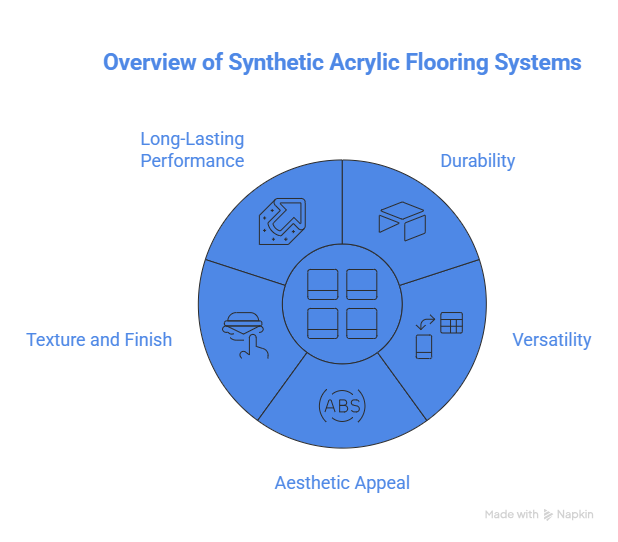
Synthetic acrylic flooring is one of the most widely used sports surface systems for outdoor courts due to its durability, performance consistency, and weather resistance. From tennis and basketball courts to multipurpose play areas, acrylic flooring delivers excellent grip, ball response, and player safety.
This in-depth guide explains what synthetic acrylic flooring is, how it works, installation layers, cost, benefits, and why it remains the preferred choice for sports courts in 2026.
What Is Synthetic Acrylic Flooring?
Synthetic acrylic flooring is a multi-layered sports surface system made using acrylic resins, rubber granules, fillers, and UV-resistant coatings. It is applied over a concrete or asphalt base to create a seamless, non-slip, and weather-resistant playing surface.
This flooring system is compliant with international sports standards and is widely used for outdoor sports courts.
Sports Where Synthetic Acrylic Flooring Is Used
Synthetic acrylic flooring is suitable for:
- Tennis courts
- Basketball courts
- Pickleball courts
- Badminton courts (outdoor)
- Volleyball courts
- Multipurpose sports courts
- School & academy play areas
Its versatility makes it ideal for both professional and recreational facilities.
Types of Synthetic Acrylic Flooring Systems
1. Hard Acrylic System
- No cushioning layer
- Direct application on concrete/asphalt
- Faster ball speed
Best for: Professional tennis courts and competitive play
2. Cushioned Acrylic System
- Includes rubber or elastomeric cushioning layers
- Reduces joint impact
- Enhanced player comfort
Best for: Academies, schools, and training facilities
3. Multi-Layer Acrylic System
- Multiple coating layers
- Improved durability and grip
- Longer lifespan
Best for: High-traffic sports facilities
Synthetic Acrylic Flooring Installation Process (Step-by-Step)
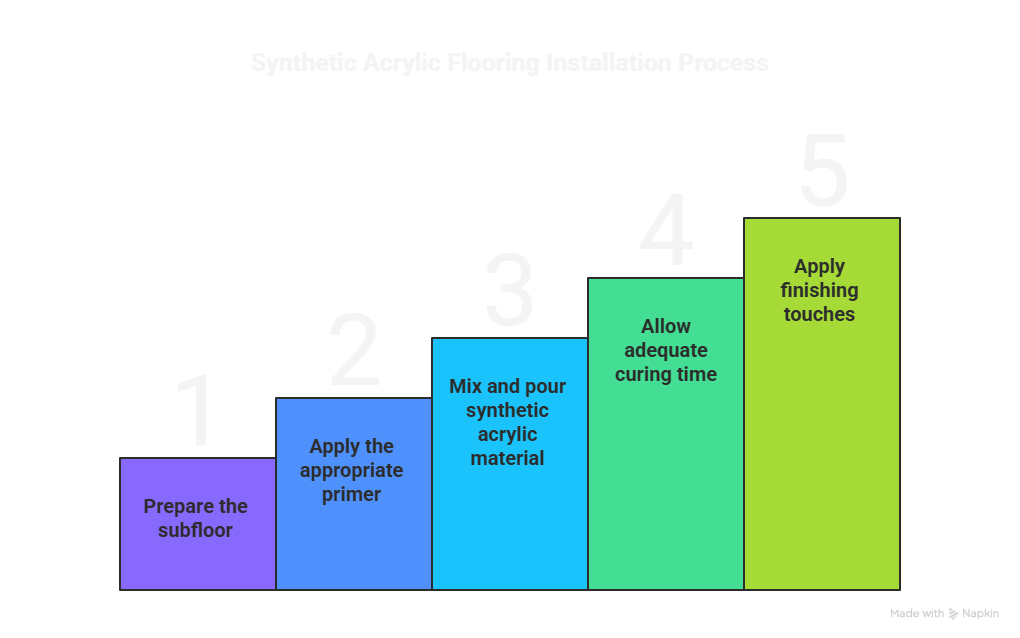
Step 1: Base Preparation
- Concrete or asphalt base must be level
- Surface cleaned and cracks repaired
Step 2: Primer Application
- Improves adhesion between base and acrylic layers
Step 3: Cushioning Layer (Optional)
- Rubber granules mixed with acrylic resin
- Provides shock absorption
Step 4: Acrylic Surface Coating
- Multiple coats applied for smooth finish
Step 5: Line Marking
- Sport-specific court markings
Step 6: Final UV-Resistant Coat
- Protects against sun exposure and fading
How Many Layers Are Used in Synthetic Acrylic Flooring?
| System Type | Number of Layers |
|---|---|
| Hard Acrylic | 5–7 layers |
| Cushioned Acrylic | 7–10 layers |
| Multi-Layer System | 8–12 layers |
The number of layers depends on sport, usage, and budget.
Synthetic Acrylic Flooring Cost (2026)
| Type | Approx. Cost (Per Sq. Ft.) |
|---|---|
| Hard Acrylic | ₹150 – ₹250 |
| Cushioned Acrylic | ₹250 – ₹450 |
| Premium System | ₹450 – ₹650 |
💡 Final cost depends on base condition, location, and court size.
Key Benefits of Synthetic Acrylic Flooring
- Excellent slip resistance
- Weather & UV resistant
- Low maintenance
- Long lifespan (5–8 years)
- Consistent ball bounce
- Custom color options
Synthetic Acrylic Flooring vs Other Sports Surfaces
| Feature | Acrylic | PU | Synthetic Turf |
|---|---|---|---|
| Outdoor Use | Excellent | Moderate | Good |
| Maintenance | Low | Medium | Medium |
| Cost | Affordable | Expensive | Moderate |
| Durability | High | High | Moderate |
Maintenance Tips for Synthetic Acrylic Flooring
- Regular sweeping
- Periodic washing
- Avoid heavy machinery
- Annual inspection
With proper care, acrylic courts retain performance for years.
Synthetic Acrylic Flooring Lifespan
- Average lifespan: 5–8 years
- Recoating recommended every 4–5 years
- Surface performance remains consistent with maintenance
Common Mistakes to Avoid
❌ Installing on uneven base
❌ Skipping crack repairs
❌ Using non-UV-resistant coatings
❌ Poor drainage planning
Ideal Locations for Synthetic Acrylic Flooring
- Schools & colleges
- Sports academies
- Residential societies
- Government sports facilities
- Recreational clubs
Is Synthetic Acrylic Flooring Environment Friendly?
Modern acrylic systems:
- Are water-based
- Low VOC compliant
- Safe for players & environment
Synthetic Acrylic Flooring Performance Characteristics
Synthetic acrylic flooring is engineered to deliver consistent performance across different sports and usage levels.
Ball Bounce Consistency
Acrylic surfaces provide predictable ball bounce, making them ideal for competitive sports like tennis, basketball, and pickleball. The textured surface ensures controlled speed without sudden skidding.
Player Traction & Safety
- Anti-slip surface texture
- Reduces risk of sudden slips
- Supports quick lateral movements
This makes acrylic flooring suitable for high-intensity training and match play.
Shock Absorption & Player Comfort
In cushioned acrylic systems, shock-absorbing layers help reduce stress on:
- Knees
- Ankles
- Lower back
This is especially beneficial for schools, academies, and recreational courts where players use the surface frequently.
Drainage & Water Resistance
Proper drainage planning is critical for outdoor acrylic courts.
- Acrylic coatings are water-resistant
- Water drains naturally with correct slope
- Quick drying after rainfall
Well-designed acrylic courts remain playable shortly after rain.
Color Options & Court Aesthetics
Synthetic acrylic flooring offers extensive customization:
- Multiple color combinations
- Matte or semi-gloss finish
- Clear contrast between playing zones
This enhances both visual appeal and gameplay clarity.
Acrylic Flooring for High-Traffic Sports Facilities
For courts with heavy daily usage:
- Multi-layer acrylic systems are recommended
- Thicker coatings improve wear resistance
- Periodic recoating extends lifespan
These systems are ideal for public courts and sports complexes.
Synthetic Acrylic Flooring for Schools & Academies
Acrylic flooring is widely used in educational institutions due to:
- Low maintenance requirements
- High durability
- Cost-effectiveness
- Safe, non-slip surface
It supports long-term usage with minimal upkeep.
Resurfacing & Recoating of Acrylic Courts
When Is Recoating Required?
- Surface color fading
- Minor cracks appearing
- Reduced traction
Benefits of Recoating
- Restores surface performance
- Improves appearance
- Costs less than new installation
Recoating is typically required every 4–5 years.
Installation Timeline & Weather Considerations
- Installation requires dry weather
- Ideal temperature range: 10°C – 35°C
- Rain delays coating applications
Planning installation during favorable weather ensures optimal results.
Quality Checks After Installation
After completion, professional installers check:
- Surface evenness
- Line marking accuracy
- Coating thickness
- Traction consistency
These checks ensure compliance with sports standards.
Synthetic Acrylic Flooring vs Epoxy Flooring
| Feature | Acrylic Flooring | Epoxy Flooring |
|---|---|---|
| Outdoor Use | Excellent | Limited |
| UV Resistance | High | Low |
| Flexibility | Flexible | Rigid |
| Sports Use | Ideal | Not recommended |
Acrylic flooring is specifically designed for sports performance.
Environmental & Sustainability Factors
Modern synthetic acrylic systems:
- Use water-based coatings
- Low VOC emissions
- Safe for long-term exposure
This makes them suitable for schools and residential areas.
Choosing the Right Acrylic Flooring System
Before finalizing:
- Identify sport type
- Estimate daily usage
- Choose cushioned or hard system
- Ensure certified materials
- Work with experienced installers
Correct selection improves performance and lifespan.
Long-Term Cost Benefits
Although initial installation costs exist, acrylic flooring:
- Requires minimal maintenance
- Reduces frequent repairs
- Offers long service life
This results in lower lifetime ownership cost.
Common Questions from Buyers
- How often is maintenance required?
- Can the court be resurfaced later?
- Is the surface safe for children?
- Will colors fade over time?
Addressing these questions builds buyer confidence.
Final Recommendation
Synthetic acrylic flooring remains one of the most practical and performance-driven solutions for outdoor sports courts. With proper installation, regular maintenance, and quality materials, acrylic courts deliver reliable performance for many years.